


Artificial intelligence startup OneTrust has spent the past decade growing at a breakneck pace.
It took only three years to become a “unicorn,” eclipsing a $1 billion valuation. It then moved into a shiny new headquarters off the Beltline, an envy for many Atlanta companies.
OneTrust’s ascent, while rare for its sheer speed, follows the typical growth story of other startup successes. That journey entered a new phase this week with an announcement that mirrors many other fast-growing companies with sky-high ambitions — a CEO change.
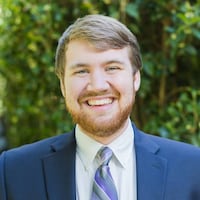
OneTrust founder Kabir Barday stepped aside Monday as CEO so a new chief executive can succeed him and lead what he built. John Heyman, who has prior experience scaling young tech companies, was named as Barday’s successor and aims to continue OneTrust’s momentum.
“No company has the combination of market leadership, scale, the team, or the hunger for innovation that we have at OneTrust,” Heyman told The Atlanta Journal-Constitution in a statement. “For any company in this favorable position, it’s a moment to bring in a CEO with deep experience building on this strong foundation to drive durable, long-term growth.”

Credit: Courtesy of OneTrust
Credit: Courtesy of OneTrust
Barday in 2016 founded OneTrust, which filled a niche by helping companies and governments handle data and AI systems responsibly. By 2020, it was the fastest-growing private company in the U.S., according to business publication Inc.
Heyman said OneTrust is now “trusted by over half the Fortune 500 to ensure our capabilities keep pace with the velocity of AI.”
Barday will remain as a OneTrust board member and will focus on long-term strategy rather than day-to-day operations. He said in a news release that this “is a pivotal time to bring on a new CEO who can harness this momentum and drive OneTrust’s next chapter of growth.”

It is common for startups to shake up their C-suite after hitting certain growth milestones, said Michael Sacks, a professor of organization and management at Emory University’s Goizueta Business School. Other well-known Atlanta companies, such as Spanx, another “unicorn,” have tapped someone to replace their founder as CEO as they scaled.
“The person who founds a company almost never has the same skills that are needed to run a large company,” Sacks said. “It’s just totally different.”
Startups often include a handful of people effectively pursuing a passion project. Success usually adds headcount, establishes departments and necessitates a new corporate structure, which may or may not be the founder’s forte, Sacks said.
Sacks said the CEO for a medium or large company has to shift to managing managers rather than interacting with the tech or small staffs that initially invigorated them.

Credit: arvin.temkar@ajc.com
Credit: arvin.temkar@ajc.com
“Someone has to manage these people … but that’s not why I signed up to be an entrepreneur,” Sacks said. “Typically, I didn’t sign up to manage people. I signed up because I’m passionate about my idea.”
Heyman spent six years as CEO of Radiant Systems, an Alpharetta-based technology provider for hospitality and retail clients. He then spent a decade as CEO of Snap One, a Charlotte-based firm specializing in smart-living products, services and software.
Both companies went through initial public offerings and were acquired by larger companies. Radiant was acquired by Atlanta-based NCR in 2011 for $1.2 billion, while Snap One was bought by Arizona-based Resideo for $1.4 billion.
Heyman didn’t say whether OneTrust is contemplating an IPO or corporate ownership change.
“OneTrust has been one of the most exciting technology companies to ever emerge in Atlanta,” he said. “Our vision will allow us to continue to evolve into one of the most exciting, independent companies in the city as we seek to enable businesses on their AI journeys.”
About the Author



Keep Reading

The Latest

Featured
