Imagine the Titanic if it were measured in salt.
The ocean liner’s hull weighed 26,000 tons, a total slightly less than the amount of salt used by the Georgia Department of Transportation to keep roads clear of snow and ice last year.
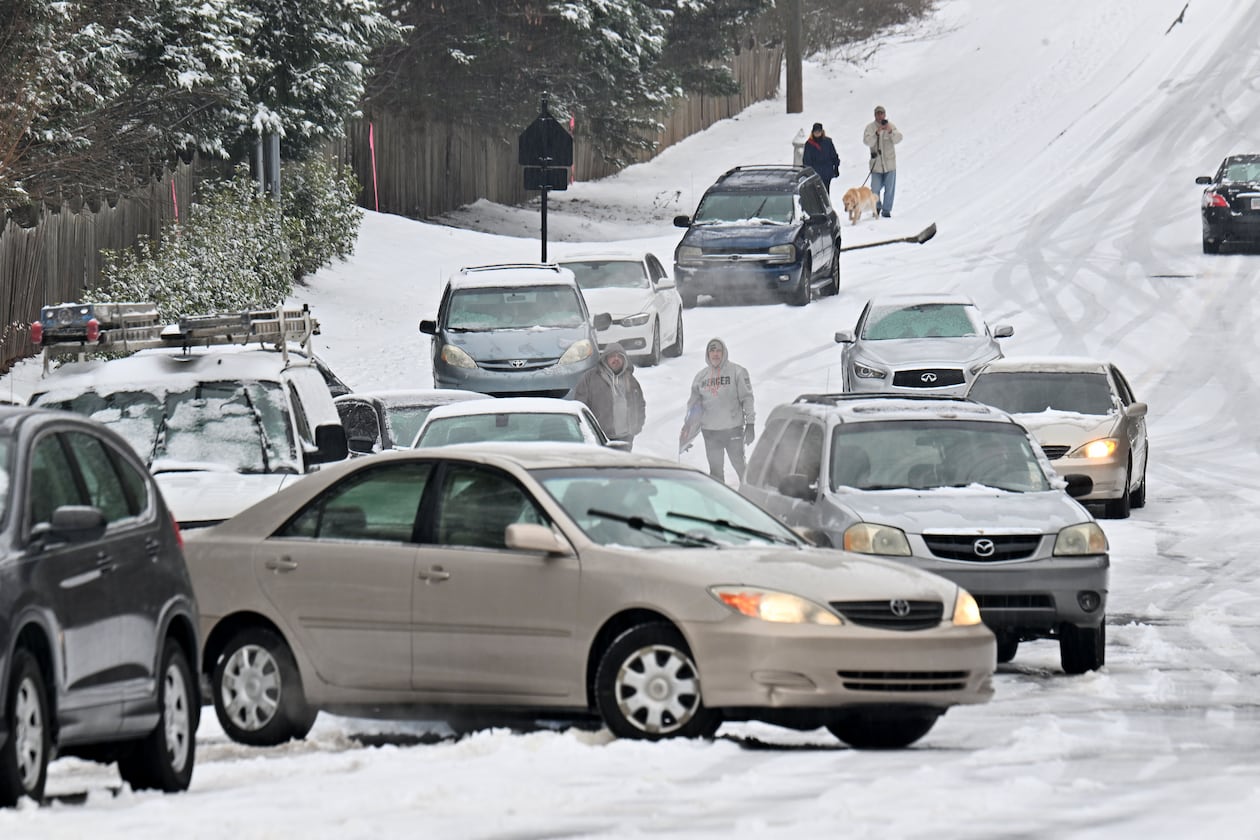
All that salt is just one part of efforts the state has made since 2014 to ensure metro Atlanta, and the rest of the state, don’t experience anything along the likes of that winter’s infamous Snowpocalypse, during which hundreds of motorists were stranded on interstates.
As arctic air moves in this weekend, the state transportation agency will again face off against Mother Nature. The National Weather Service is predicting “significant” impacts from snow and ice beginning Saturday and lasting through the Monday morning commute, part of a larger weather system affecting states from New England to the Midwest.
GDOT officials want the public to know: A lot has changed since 2014. Their strategy today is much more aggressive and involves more staffing, more equipment and more salt to keep the thousands of miles of roadway the state maintains safe. Staff from across the state now attend classes every year that GDOT has dubbed “snow school.”
Here’s what to expect:
Before the storm
While Atlantans are clearing grocery store aisles of milk and bread, the transportation department’s crews will be pretreating roadways.
GDOT maintains 2,781 miles of road in metro Atlanta and almost 43,000 statewide. Covering that distance takes time, said Natalie Dale, a spokesperson for the department.

Credit: Miguel Martinez-Jimenez
Credit: Miguel Martinez-Jimenez
During a storm, GDOT’s Forest Park facility operates like a NASCAR pit crew, with trucks loading up on brine as fast as possible. Across the state, there are 439 trucks on hand to pretreat and plow roadways.
“One of the most important things we’re doing to recover during and after the storm is to get that pretreatment down,” Dale said.
Crews work together, escorted by Georgia State Patrol officers. Every lane has to be pretreated, which means multiple trips up and down stretches of the interstate, at 40 mph or less. A single treatment can take a full 12-hour shift.
GDOT uses road weather sensors in 57 locations to measure air, surface and subsurface temperatures. The warmer the road temperature, the less likely precipitation is to freeze. Data from the sensors help the department target where brine is needed most.
Depending on the forecast, crews could apply brine as many as three times. Crews prioritize interstates first, particularly the areas around hospitals, then tackle state routes.
In 2014, one of GDOT’s districts had 1,000 gallons of brine, made from a machine Dale described as “Frankensteined” out of different parts. Now, the state keeps 1.3 million gallons on hand.
It takes about 113,000 gallons to coat the metro.
GDOT asks drivers who see brine trucks on the interstate to keep their distance — for safety and to keep salt from getting on your car.
GDOT: Stay home during and immediately after storm
If the forecast simply called for snow, removal efforts would be easier. Snow can be plowed. Ice? Not so much.
Georgia typically deals with more of the latter, and ice sheets thicker than a quarter-inch are possible with this approaching storm.
Brine — a combination of salt and water — works by lowering water’s freezing point. That makes it critical for efforts here, where temperatures during winter weather storms often hover right around freezing, Dale said. It stops ice from sticking to the pavement.
The brine is mixed by a machine called the “brine boss.” Operators set the ratio — 23% salinity — and the machine does the rest.

Credit: HYOSUB SHIN / AJC
Credit: HYOSUB SHIN / AJC
Brine pretreatments help keep roadways from freezing. But after ice is on the roadways, GDOT crews use a salt and gravel mixture to help break it up. For thick patches of ice, GDOT brings in the big guns: calcium chloride.
When calcium chloride comes into contact with ice, it heats up fast. But GDOT limits where it uses calcium chloride because it has to be cleared off the roadways fast or it will refreeze. One crew will apply it and another comes behind and plows immediately to clear the roadway.
“It just involves a little more manpower and a little more delicate work,” Dale said.
As tempting as it is to venture out once the weather subsides, Dale asked drivers to stay home until the roads are fully clear. It’s easier to treat whatever ends up coating the roadways without having to navigate around traffic jams and crashes.
“Whether it’s brine or salt or plowing, we can’t treat in a traffic jam,” Dale said.
About the Author



Keep Reading

The Latest

Featured